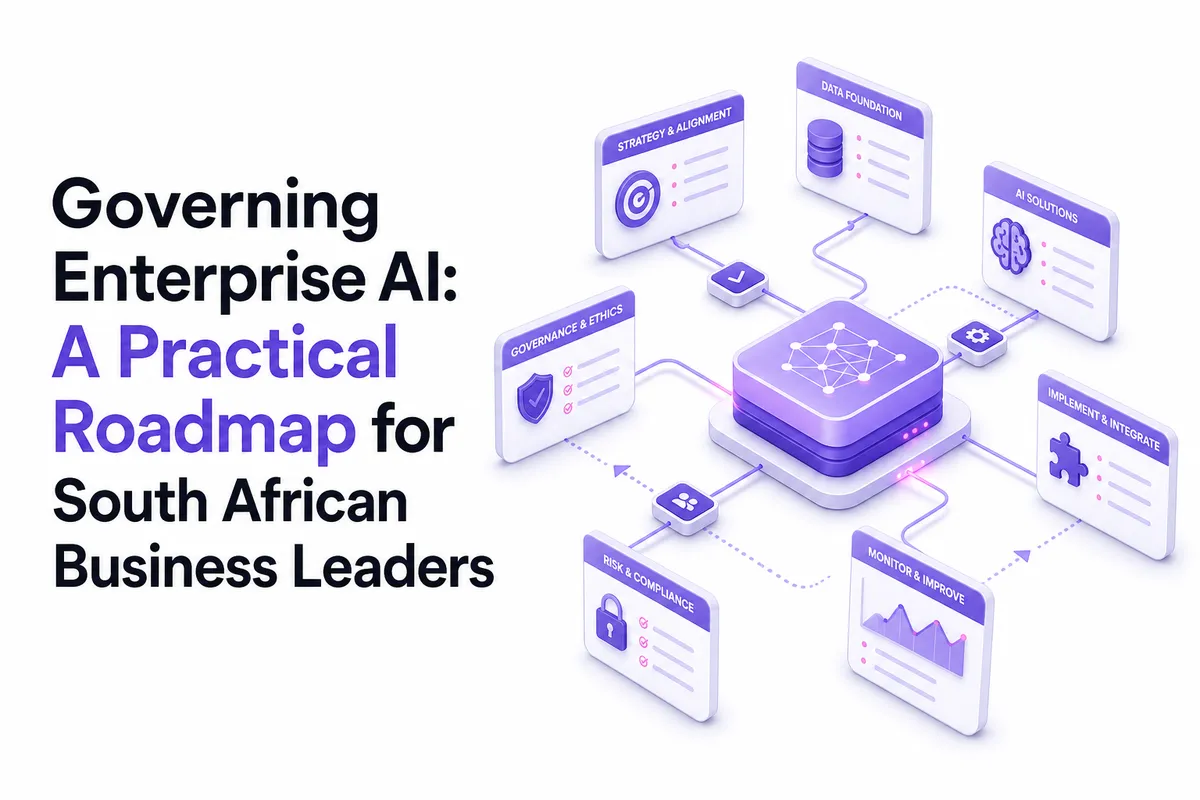
Governing Enterprise AI: A Practical Roadmap for South African Business Leaders
How South African mid-sized businesses can establish AI steering committees, operationalise risk frameworks like ISO/IEC 42001, and navigate POPIA compliance without stalling digital innovation.
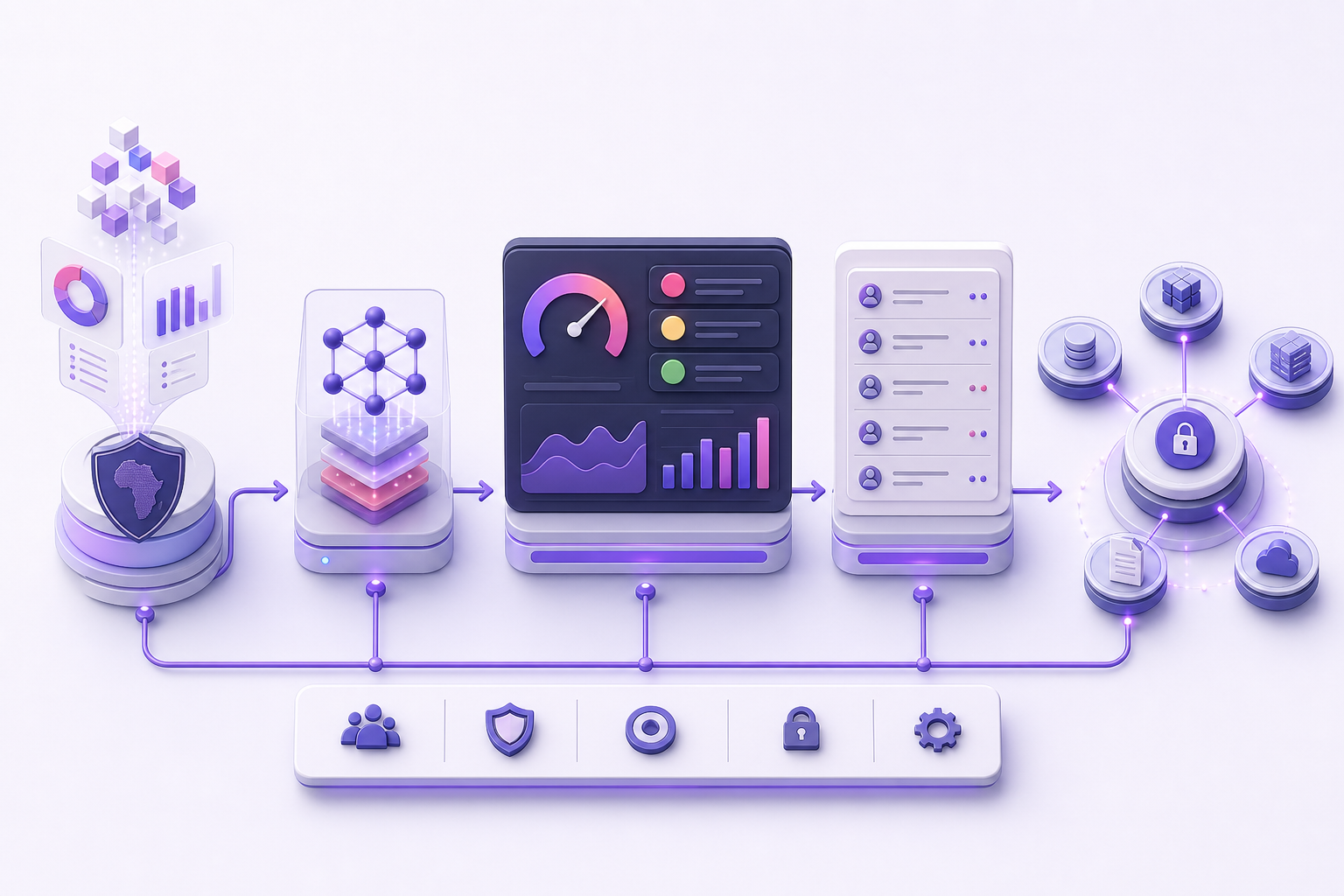
The Executive Challenge: Why Unmanaged AI Adoption Creates Hidden Operational Risk
Many South African enterprises are accelerating the adoption of artificial intelligence to optimise workflows, automate documentation, and enhance customer service. Rapid deployment without formal oversight, however, introduces subtle but significant operational, legal, and reputational risks. When employees independently introduce commercial AI tools into daily operations without vetting, proprietary intellectual property or confidential client information may be inadvertently exposed to external systems. This pattern—often called shadow AI—leaves leadership unable to verify how data is processed, stored, or reused, creating unmanaged liabilities that are difficult to detect until something goes wrong.
Establishing executive AI leadership is no longer an optional IT function; it is a fundamental governance priority. Effective oversight does not mean halting innovation or imposing bureaucratic friction that slows productivity. It means providing clear operational boundaries, proportionate risk thresholds, and accountable decision-making structures. By moving from passive curiosity to deliberate governance, executives give their teams the confidence to explore automation safely—maintaining legal alignment and protecting the customer trust that every digital touchpoint depends on.
Operationalising Responsible AI Governance Frameworks
Structured frameworks translate abstract governance principles into day-to-day business practice. Global standards such as ISO/IEC 42001 for AI management systems and the NIST AI Risk Management Framework offer adaptable structures for enterprise oversight. Rather than constructing complex custom policies from scratch, mid-sized organisations can adapt these established pillars to categorise risks, evaluate third-party software, and maintain clear documentation for leadership review. Anchoring policy to recognised international standards also strengthens the organisation's position in client and partner due-diligence conversations.
Applying these frameworks helps South African businesses align operational objectives with the data protection obligations of the Protection of Personal Information Act. By defining human oversight protocols, data handling standards, and vendor review requirements early, executive leadership builds a resilient foundation that can scale. This proactive approach keeps AI initiatives transparent, accountable, and adaptable as technology evolves and regulatory scrutiny deepens across both local and international commercial markets.
Risk-Based System Classification
Classify every AI tool and use case by its potential business, operational, and privacy impact. Clear risk tiers allow the committee to apply stricter verification to high-risk applications while preserving speed for routine, low-risk workflow tools.
Human Oversight at Key Decision Points
Embed human review checkpoints into automated processes for high-stakes outputs. This supports operational accountability and is relevant wherever automated outputs could substantially affect individuals or carry legal consequences.
Proportionate Data Safeguards
Restrict automated workflows to the minimum data inputs needed for the task. Under POPIA Section 19, responsible parties must implement appropriate, reasonable technical and organisational measures proportionate to identified risks—the specific controls depend on the nature and sensitivity of the data involved.
Vendor and Lifecycle Auditing
Maintain continuous evaluation of external AI tools and providers. Governance teams should verify vendor security postures, data retention policies, feature changes, and ongoing alignment with internal risk standards across the full operational lifecycle.
Practical Application: Governing Automated Client Onboarding
Note: The following is a hypothetical example intended to illustrate governance principles in practice. Consider a South African financial services firm seeking to streamline client onboarding and credit risk assessment. The operational goal is to use analytical models to evaluate submitted documentation and generate preliminary risk summaries for human underwriters. To reduce the risk of operational errors, algorithmic bias, and compliance gaps under local data protection legislation, the executive team establishes a formal AI governance structure before deploying the technology.
The firm's steering committee specifies that automated risk scores serve as decision-support inputs rather than binding approvals. Human underwriters review every generated summary alongside maintained audit records, and the organisation is designed so that no final credit decision rests solely on automated processing intended to profile a data subject—a configuration informed by POPIA Section 71(1), which restricts decisions that result in legal consequences or substantially affect a data subject and are based solely on such automated processing, subject to the exceptions in Section 71(2). Periodic impact assessments can help confirm that data handling protocols remain fit for purpose. This structured approach is designed to support modernisation while lowering the risk of compliance gaps—though outcomes will always depend on consistent implementation.
A Step-by-Step Blueprint to Establish an AI Steering Committee
Form a cross-functional governance committee with representatives from executive leadership, legal and compliance, risk management, information technology, and core operational units. This interdisciplinary composition ensures that commercial productivity targets are weighed against data privacy obligations, organisational risk tolerance, and cybersecurity considerations. The committee should meet on a defined cadence—quarterly at minimum—with a clear mandate to approve new AI deployments, review incidents, and update policy as the technology and regulatory environment change.
Assign a named committee chair who holds accountability for escalating governance decisions to the board when material risk thresholds are reached. Build a comprehensive operational inventory logging every AI application, automated workflow, and cloud integration active within the business, documenting each system's owner, data inputs, model provider, and intended scope. Centralised visibility eliminates unmanaged shadow software and enables thorough risk mapping across all departments.
Establish a risk-tier classification system that creates meaningful operational distinctions. Low-risk tools—such as internal productivity assistants that process no personal information—may be approved through a lighter review pathway. Medium-risk applications, such as document processing tools that handle client data, require vendor due diligence covering data retention policies, subprocessor arrangements, and security posture. High-risk applications—particularly any model whose outputs could substantially affect individual clients, employees, or third parties—require a full impact assessment, documented human oversight protocols, and steering committee sign-off before deployment. Introduce mandatory procurement gateways so that business and technology project leads complete structured impact evaluations before purchasing external tools or developing custom models.
Navigating Implementation Challenges and Regulatory Realities
A frequent failure mode in AI governance is treating policy creation as a one-time compliance event rather than an ongoing operational discipline. Policies that exist only as slide decks do not shape daily working habits and leave organisations exposed to errors and compliance gaps. Effective governance requires controls embedded directly into procurement workflows, software development pipelines, and staff onboarding. For procurement, this means no new AI tool reaches production without a completed risk assessment and documented approvals.
For staff onboarding, it means new employees complete practical AI usage training before accessing automation tools—not generic IT policy acknowledgement, but scenario-based guidance on acceptable use, data handling, and escalation paths for unfamiliar tools. Regular tabletop exercises, where teams walk through a hypothetical AI incident, can surface gaps in oversight processes before a real event occurs.
South Africa's AI regulatory environment is actively developing but does not yet include dedicated AI legislation. The Department of Communications and Digital Technologies published a National AI Policy Framework in August 2024 as a consultative first step toward a full national policy. A draft national AI policy published in April 2026 was subsequently withdrawn in June 2026. POPIA therefore remains the primary applicable data protection statute for AI use cases involving personal information, and its principles—including proportionate safeguards, purpose limitation, and data minimisation—provide a practical compliance anchor while the policy process continues.
Important: This article provides general business information, not legal, tax or financial advice. Confirm requirements for your circumstances with a suitably qualified professional.