The Benefits of CRM for Businesses in 2026
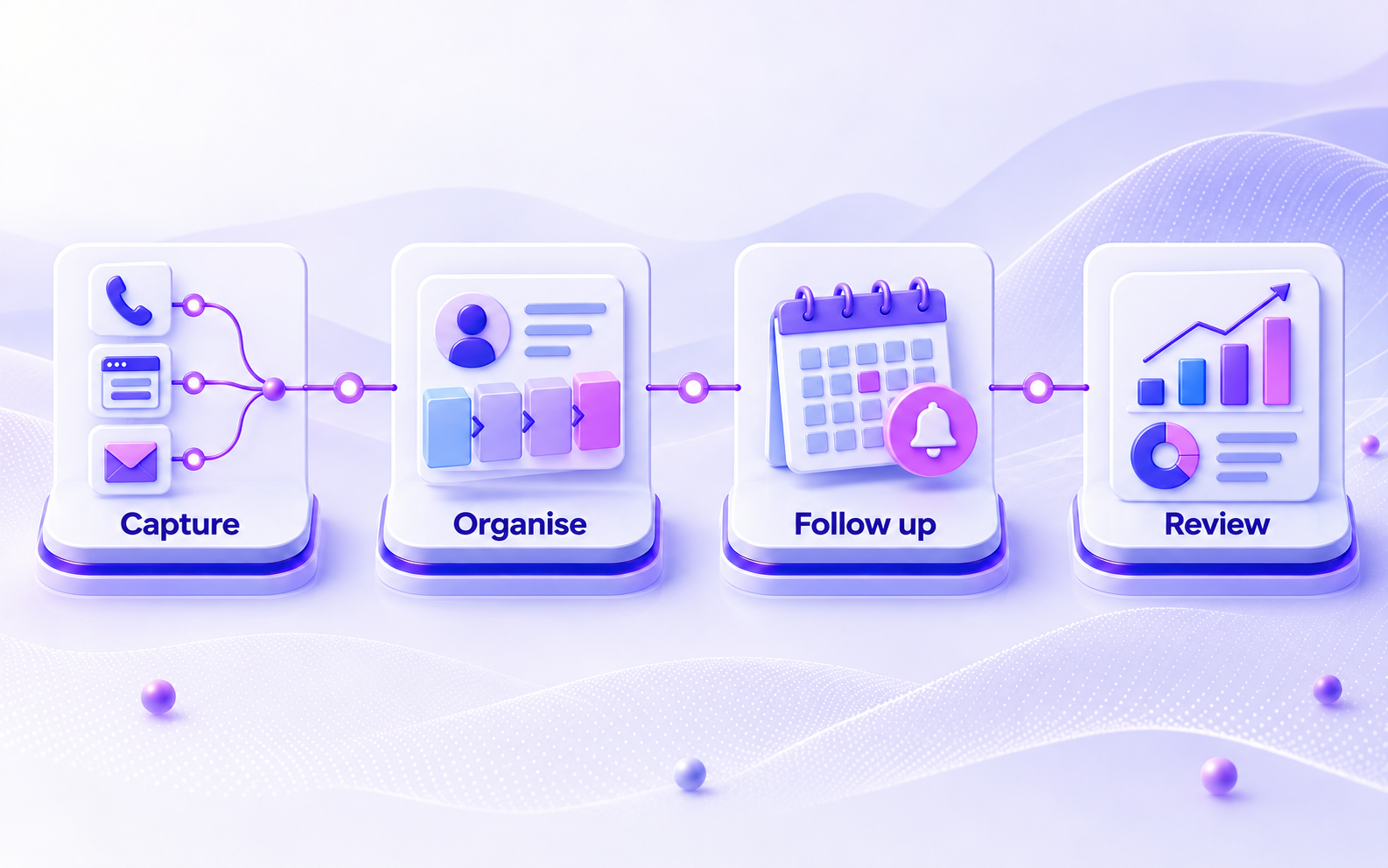
Learn how a CRM can help your business capture enquiries, organise customer information, follow up consistently and see where sales opportunities stand.
Introduction to CRM and Sales Pipelines
Customer Relationship Management (CRM) systems are essential tools for businesses to manage interactions with current and potential customers. A CRM system stores every customer interaction in one place, automates repetitive tasks like follow-ups and invoicing, and gives sales, marketing, and support teams a shared view of each account. In South Africa, the CRM market has exploded as IT consultancies and creative agencies realise that client retention is everything.
The entire Africa CRM market kicked off at $270.23 million in 2023, and South Africa alone is projected to hit $527.38 million by 2031. A huge driver is the 56% surge in BPO services, where managing client relationships with the right tools is the core of the business. In this article, we will explore the benefits of CRM for businesses in 2026, including improved efficiency, better customer relationships, and increased revenue.
Benefits of CRM for Businesses in 2026
The benefits of CRM for businesses in 2026 are numerous. Firstly, CRM automation shortens sales cycles by 8-14% and reduces missed opportunities. Companies using CRM report a 300% increase in conversion rates, a stat driven by better follow-up timing and centralized contact data rather than by any single feature. Secondly, customer retention goes up when every call, email, and purchase history sits in one record, support and sales teams respond with context instead of guessing.
In addition, CRM systems improve retention rates by up to 27%. The mechanism is straightforward: when every interaction sits in one record, support and sales teams respond with context instead of guessing. This leads to better customer relationships and increased revenue. According to Nucleus Research, the average return is $8.71 for every $1 spent on CRM. Most companies reach positive ROI within 12 months, and initial benefits show up within 90 days.
Choosing the Right CRM for Your Business
Choosing the right CRM for your business is crucial. There are many CRM options available in the market, each with its own strengths and weaknesses. For example, HubSpot CRM is an all-in-one CRM that offers intuitive pipeline views, strong reporting, and built-in automation. Salesforce CRM is a highly customizable enterprise CRM that requires admin effort and add-ons for advanced analytics.
Pipedrive CRM is a sales-first CRM that is focused on visual pipelines and activity tracking. The choice of CRM depends on the business size, complexity, and long-term goals. South African businesses also need to factor in exchange rates and total cost of ownership, not just entry-level pricing. It is essential to evaluate the different CRM options and choose the one that best fits your business needs.
All-in-one CRM
HubSpot CRM brings visual pipeline views, reporting and built-in automation together.
Enterprise CRM
Salesforce CRM offers extensive customisation, though advanced analytics can require more administration.
Sales-focused CRM
Pipedrive CRM centres on visual deal stages and activity tracking for sales teams.
Implementation Approach and Risks
Implementing a CRM system requires a well-planned approach. Firstly, it is essential to define the sales pipeline stages and set clear entry and exit criteria. Secondly, the CRM system should be configured to reflect the new structure, and all reps should be trained on the new playbook. Thirdly, weekly pipeline reviews and hygiene cadences should be established to ensure the CRM system is used effectively.
However, there are also risks associated with implementing a CRM system. For example, poor lead management can waste up to 79% of leads and cost companies an average of $1 million annually. Additionally, the CRM system may not be adopted by all users, which can lead to inaccurate data and reduced effectiveness. It is essential to address these risks and ensure that the CRM system is used effectively to achieve the desired benefits.
Conclusion and Takeaways
In conclusion, CRM systems are essential tools for businesses to manage interactions with current and potential customers. The benefits of CRM for businesses in 2026 include improved efficiency, better customer relationships, and increased revenue. Choosing the right CRM for your business is crucial, and implementing a CRM system requires a well-planned approach.
The key takeaways from this article are: CRM systems can improve efficiency and revenue, choosing the right CRM is crucial, and implementing a CRM system requires a well-planned approach. By following these takeaways, businesses can effectively use CRM systems to achieve their goals and stay competitive in the market. Takeaways: CRM improves efficiency, CRM increases revenue, Choose the right CRM.
Future of CRM and Sales Pipelines
The future of CRM and sales pipelines is exciting. With the increasing use of artificial intelligence and machine learning, CRM systems will become even more powerful and effective. For example, AI-powered chatbots can help automate customer support and improve response times. Additionally, predictive analytics can help businesses forecast sales and make data-driven decisions.
In South Africa, the CRM market is expected to continue growing, driven by the increasing demand for digital transformation and customer experience. Businesses that adopt CRM systems and sales pipelines will be well-positioned to take advantage of this growth and stay competitive in the market. As the CRM market continues to evolve, it is essential for businesses to stay up-to-date with the latest trends and technologies to achieve their goals.