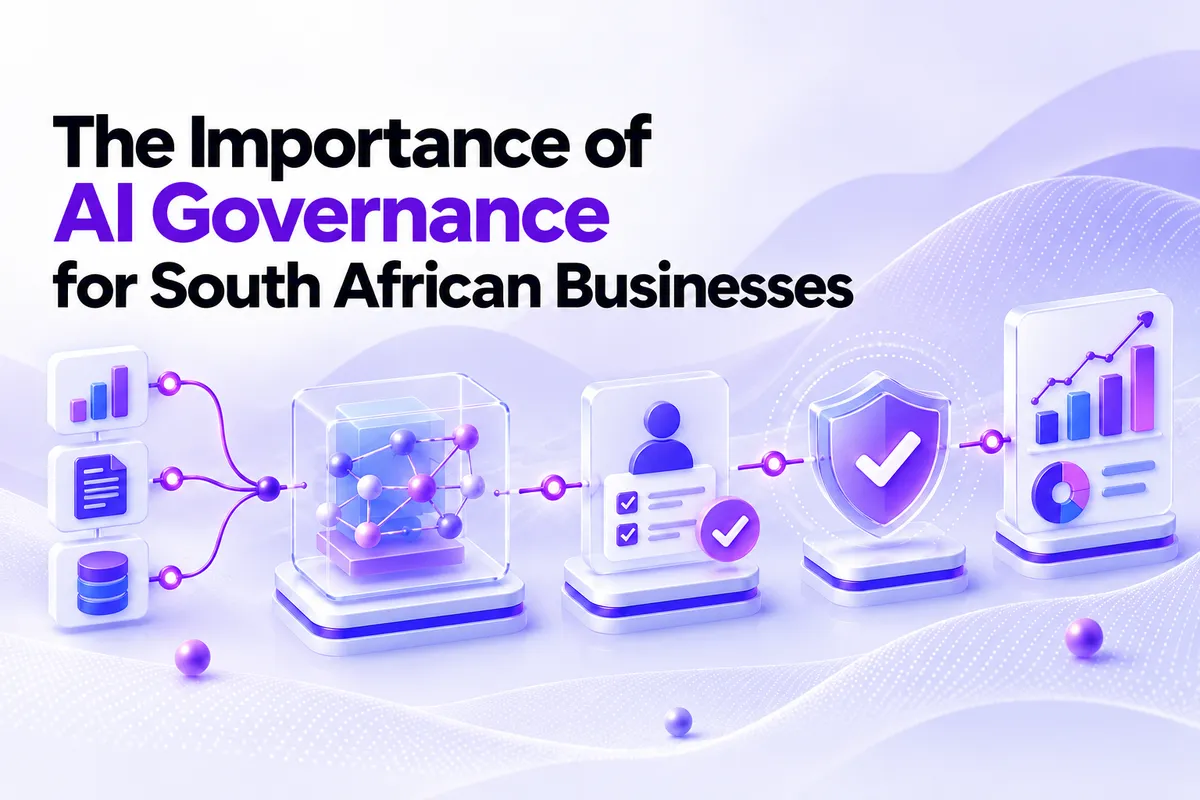
The Importance of AI Governance for South African Businesses
AI governance is crucial for South African businesses to ensure responsible and effective use of artificial intelligence technologies.
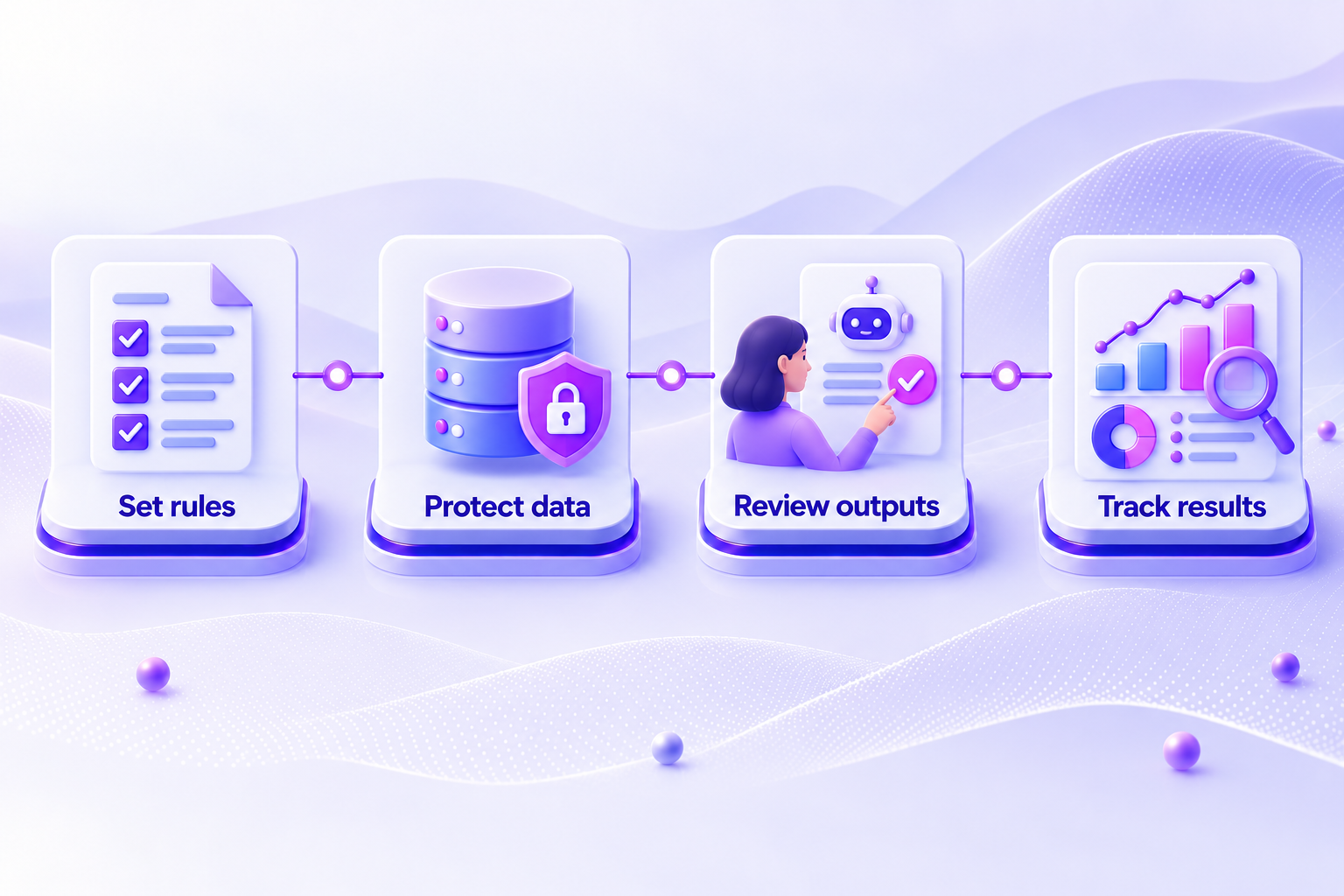
Introduction to AI Governance
AI governance refers to the comprehensive management system that guides how organizations develop, deploy, and use artificial intelligence technologies responsibly and effectively.
It encompasses the policies, procedures, organizational structures, and technical controls that ensure AI systems align with business objectives, regulatory requirements, ethical standards, and risk tolerance.
AI governance ensures that AI systems are developed and deployed responsibly, aligning with ethical standards and regulatory requirements. By establishing clear policies and procedures, businesses can mitigate risks, protect sensitive data, and maintain public trust. Effective governance also supports innovation by providing a structured framework for experimentation and scaling AI initiatives.
Importance of AI Governance in South Africa
South African businesses face growing pressure to scale AI implementation beyond pilots, and a clear adoption strategy is essential for competing in the enterprise landscape.
According to Deloitte's 2026 State of AI in the Enterprise, 66% of organizations report tangible productivity and efficiency gains from AI, and the global AI market is valued at $305 billion in 2026.
South African businesses are increasingly recognizing the importance of AI governance as they scale AI adoption. According to Deloitte, 66% of organizations report tangible productivity gains from AI, underscoring the need for robust governance frameworks to maximize these benefits. The competitive landscape in South Africa, driven by advanced AI adopters like FirstRand and Standard Bank, highlights the urgency for businesses to implement governance strategies that support both innovation and compliance.
Implementing AI Governance
A phased rollout works better, starting with a pilot, then integrating processes, scaling automation, and continuously optimizing.
The most successful companies follow a strategic adoption approach, starting with business problems, not technology, and prioritizing quick-win use cases.
Implementing AI governance requires a strategic approach, starting with a clear understanding of business objectives and risk tolerance. Organizations should establish cross-functional teams to oversee AI initiatives, develop policies for data usage and model transparency, and implement technical controls to monitor AI systems. By fostering collaboration between IT, legal, and business units, companies can create a governance structure that supports both innovation and accountability.
Governance Approach
Risk-based governance
Experimental Space
Sandbox environments
Benefits and Challenges of AI Governance
AI governance helps organizations manage risks, ensure compliance, and achieve measurable business value from AI initiatives.
However, implementing AI governance can be complex, requiring significant changes to existing processes, systems, and culture.
One of the key challenges in AI governance is balancing innovation with risk management. While businesses want to leverage AI for competitive advantage, they must also address concerns around bias, privacy, and security. Successful organizations implement iterative governance approaches, starting with high-priority use cases and expanding controls as they gain experience. This allows them to adapt to evolving risks while maintaining agility in their AI initiatives.
Boundary Setting
Clear guardrails
Implementation Method
Iterative approach
Best Practices for AI Governance
Enterprises with clearly articulated AI strategies outperform peers in revenue growth, productivity, and innovation velocity.
A winning enterprise AI strategy in 2026 requires clear business alignment, a strong data foundation, ethical governance, scalable architecture, and a roadmap from pilot to production.
Best practices for AI governance include establishing clear guardrails for AI usage, fostering a culture of accountability, and leveraging technology to monitor AI systems. Companies should also invest in employee training to ensure that teams understand governance policies and can apply them effectively. By integrating governance into the AI lifecycle, from development to deployment, businesses can ensure that their AI initiatives deliver measurable value while minimizing risks.
Conclusion
In conclusion, AI governance is essential for South African businesses to ensure responsible and effective use of artificial intelligence technologies.
By following best practices and implementing a comprehensive AI governance framework, organizations can achieve measurable business value from AI initiatives and stay competitive in the enterprise landscape.
In conclusion, AI governance is a critical enabler for South African businesses looking to harness the power of AI. By implementing robust governance frameworks, organizations can mitigate risks, protect sensitive data, and maintain public trust. As the AI landscape continues to evolve, businesses that prioritize governance will be better positioned to achieve sustainable competitive advantage and deliver measurable value from their AI initiatives.
Important: This article provides general business information, not legal, tax or financial advice. Confirm requirements for your circumstances with a suitably qualified professional.