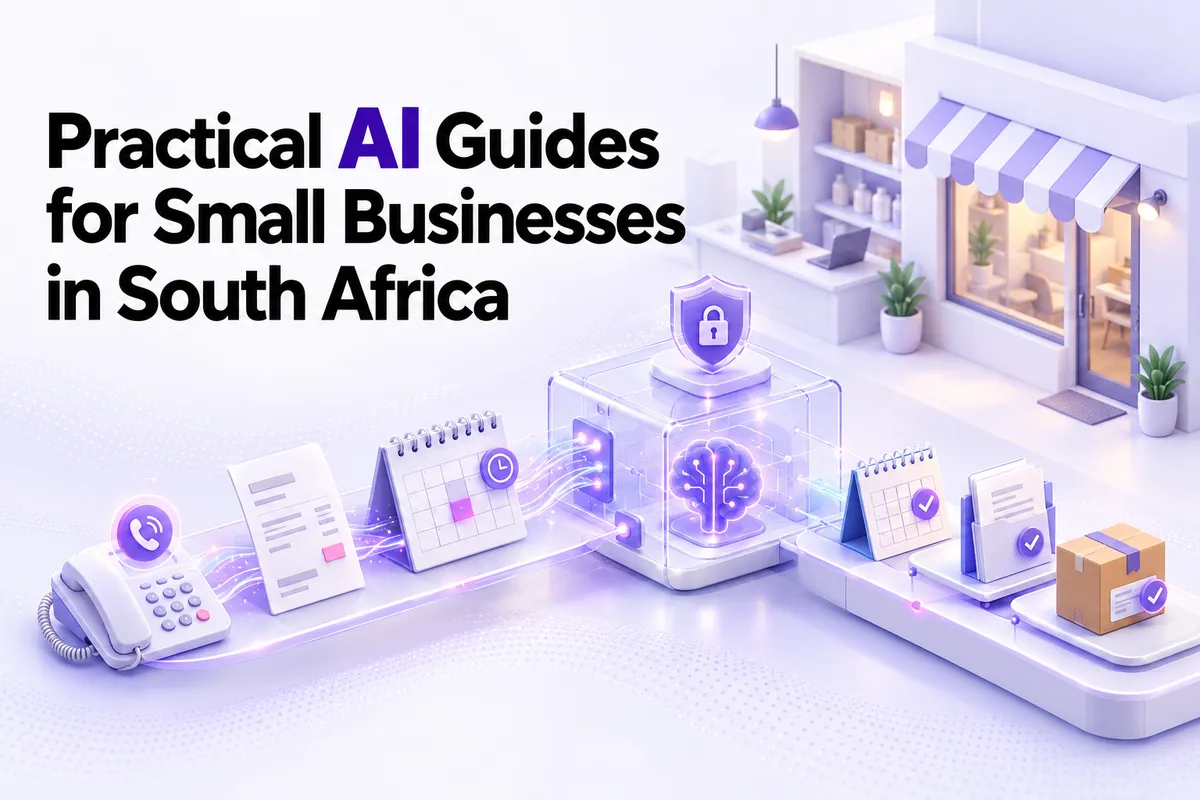
Practical AI Guides for Small Businesses in South Africa
practical AI guides
Practical AI Guides for Small Businesses in South Africa
Practical AI guides for small businesses in South Africa, including approachable how-to advice, readiness checks, and compliance considerations.
Evert Vorster•3 October 2026•5-minute read

What you need to know
AI enhances efficiency and customer service
Select AI tools that integrate with existing systems
Ensure data security and POPIA compliance
Continuous learning drives AI success
Start with high-impact AI applications
Introduction to AI for Small Businesses
Small businesses in South Africa can leverage AI to automate tasks, enhance customer service, and boost efficiency. AI tools like ChatGPT and Zapier can assist with writing, customer support, and workflow automation, helping businesses save time and resources.
To begin with AI, identify repetitive tasks such as data entry or email responses. Exploring AI tools that integrate with existing systems can provide quick wins and demonstrate AI's value to stakeholders.
Before diving into AI, conduct a readiness check. Identify pain points in your operations, assess your current tools, and determine which AI solutions can address these issues. Starting small ensures you avoid overwhelm and can scale effectively as you gain experience.
Benefits of AI for Small Businesses
AI offers significant benefits, including increased efficiency, improved customer service, and better decision-making. By automating routine tasks, businesses can focus on strategic activities, while AI-driven insights help in identifying market trends and optimizing operations.
Enhanced customer retention is another advantage. AI-powered chatbots provide personalized support, improving customer satisfaction and loyalty. These tools can offer tailored recommendations and resolve issues in real-time.
AI can significantly reduce operational costs. For instance, automating invoice processing can cut admin costs by over R100,000 annually. These savings allow businesses to reinvest in growth initiatives without requiring substantial upfront investment or technical expertise.
AI Tools and Technologies
Key AI tools for small businesses include ChatGPT for content creation, Zapier for workflow automation, and Microsoft 365 Copilot for productivity enhancement. These tools integrate seamlessly with existing software, making adoption smoother.
When selecting AI tools, prioritize platforms that align with your workflows and data security needs. Tools like Canva Magic Studio and HubSpot Breeze offer design and marketing support, while Zoho’s Zia aids in customer process management.
Integration is key when adopting AI tools. Tools like Zapier and Microsoft 365 Copilot seamlessly connect with existing software, ensuring a smooth transition. Prioritize tools that align with your workflows and maintain data security to avoid shadow AI risks.
ChatGPT
AI tool for content creation and customer communication.
Zapier
Automation platform for connecting apps and workflows.
Microsoft 365 Copilot
AI integration for productivity tools like Word and Excel.
Implementing AI in Small Businesses
Successful AI implementation starts with clear goals and identifying high-impact tasks. Develop a plan that includes staff training and integration with existing systems. Monitoring effectiveness and making adjustments ensures optimal results.
Prioritize workflows with the highest ROI, such as document processing or lead management. For example, automating invoice processing can reduce manual work and errors, freeing staff for strategic tasks.
Starting with a pilot project is a smart strategy. Choose a high-impact task, implement the AI solution, and monitor its effectiveness. This approach allows you to gather feedback, make necessary adjustments, and build confidence before full-scale adoption.
Data Security and POPIA Compliance
Implementing AI responsibly requires addressing data security and compliance with POPIA. Ensure AI tools handle data securely and comply with legal requirements. This involves selecting tools with strong data protection policies and avoiding sensitive data exposure.
POPIA compliance involves adopting appropriate technical and organizational measures. This includes encryption, access controls, and regular audits. Businesses must ensure that AI systems do not compromise customer data privacy.
A robust governance framework is essential for POPIA compliance. Regular audits and employee training ensure that data handling practices meet legal standards. Select AI tools with strong data protection policies to safeguard customer information and maintain trust.
Continuous Learning and Adaptation
Staying updated on new AI tools and techniques is crucial for maximizing benefits. Continuous learning ensures businesses can adapt to technological advancements and evolving market needs.
Encourage a culture of experimentation and feedback. Regularly assess AI tools' performance and explore new applications to stay competitive and responsive to customer demands.
Continuous monitoring of AI tools is crucial. Regularly assess their performance, seek expert advice when needed, and explore new applications to stay competitive. This proactive approach ensures that your AI initiatives remain aligned with business goals and market trends.
Conclusion
AI presents a transformative opportunity for small businesses in South Africa, offering efficiency gains, improved customer service, and informed decision-making. By starting with clear goals, selecting the right tools, and ensuring compliance, businesses can harness AI's potential effectively.
To begin, identify a specific task for automation, choose tools that integrate with your systems, and prioritize data security. Continuous learning and adaptation will ensure sustained success in the AI-driven landscape.
AI offers a transformative opportunity for growth. By setting clear goals, selecting the right tools, and fostering a learning culture, businesses can unlock AI's potential. Continuous adaptation and learning will ensure sustained success in this evolving landscape.
Important: This article provides general business information, not legal, tax or financial advice. Confirm requirements for your circumstances with a suitably qualified professional.
Turn this idea into a working system
To discuss how your business can benefit from AI, contact us at